The Underwriting Reality Behind the Senate's Letter to the SBA
• SOP 50 10 8 (effective June 2025) prohibits SBA 7(a) and 504 loans from being used to refinance merchant cash advances — and that rule is not going away regardless of Senate pressure.
• The hidden consequence: underwriters must now include existing MCA payments in DSCR calculations alongside the proposed SBA payment, pushing many previously-approvable files into decline territory.
• The SBA made the rule because businesses were using SBA loans to pay off MCAs and then re-stacking — a pattern that was driving defaults on government-guaranteed loans.
• Approvals on MCA-burdened files are still happening, but borrowers need stronger cash flow, the right lender match, and a realistic picture of their DSCR before they apply.
On May 14, 2026, Senators Ron Wyden and Edward J. Markey sent a letter to SBA Administrator Kelly Loeffler demanding answers about a policy change that has quietly reshaped SBA lending since June 2025: the prohibition on using SBA 7(a) and 504 loans to refinance merchant cash advance debt.
For SBA lenders and the businesses applying for SBA loans, this is not news. It is the underwriting reality we have been operating in for nearly a year. What the Senators are now publicly questioning, SBA underwriters have been quietly enforcing on every application that walks in the door with MCA debt attached.
This post explains what that reality actually looks like, why the rule was put in place, and what it means for any business owner currently carrying MCA debt who wants an SBA loan in 2026.
What the Senate Letter Is Actually About
The Wyden-Markey letter focuses on a single SBA policy change embedded in SOP 50 10 8, which took effect June 1, 2025. The relevant language is short and direct:
"Merchant cash advances and factoring agreements are not eligible for refinancing."
That is one sentence in a several-hundred-page operating procedure document. But that one sentence is responsible for a significant share of the SBA loan declines we have seen across the lender network since the middle of 2025. We covered the rule change in detail when it was first announced, but the short version is this: SBA 7(a) and 504 proceeds can no longer touch MCA or factoring debt, full stop.
The Senators are concerned that the rule, combined with the cash crunch caused by 2025 tariff actions, has left small businesses without an escape route from expensive MCA debt. That concern is legitimate. But it is only half the picture. The bigger story for borrowers is what the rule has done to underwriting itself.
The Underwriting Consequence Most Borrowers Don't See
Before June 2025, an SBA lender could look at a business with two or three active MCAs, calculate how much debt service relief the borrower would get if the SBA proceeds paid off those MCAs, and underwrite the loan against the post-refinance cash flow picture. That math often worked. A business with $25,000 a month in MCA payments and $40,000 a month in free cash flow looked very different on paper once the MCAs were retired and the new SBA payment was $8,000 a month. The deal penciled out. The borrower got approved.
After June 2025, that math is no longer available.
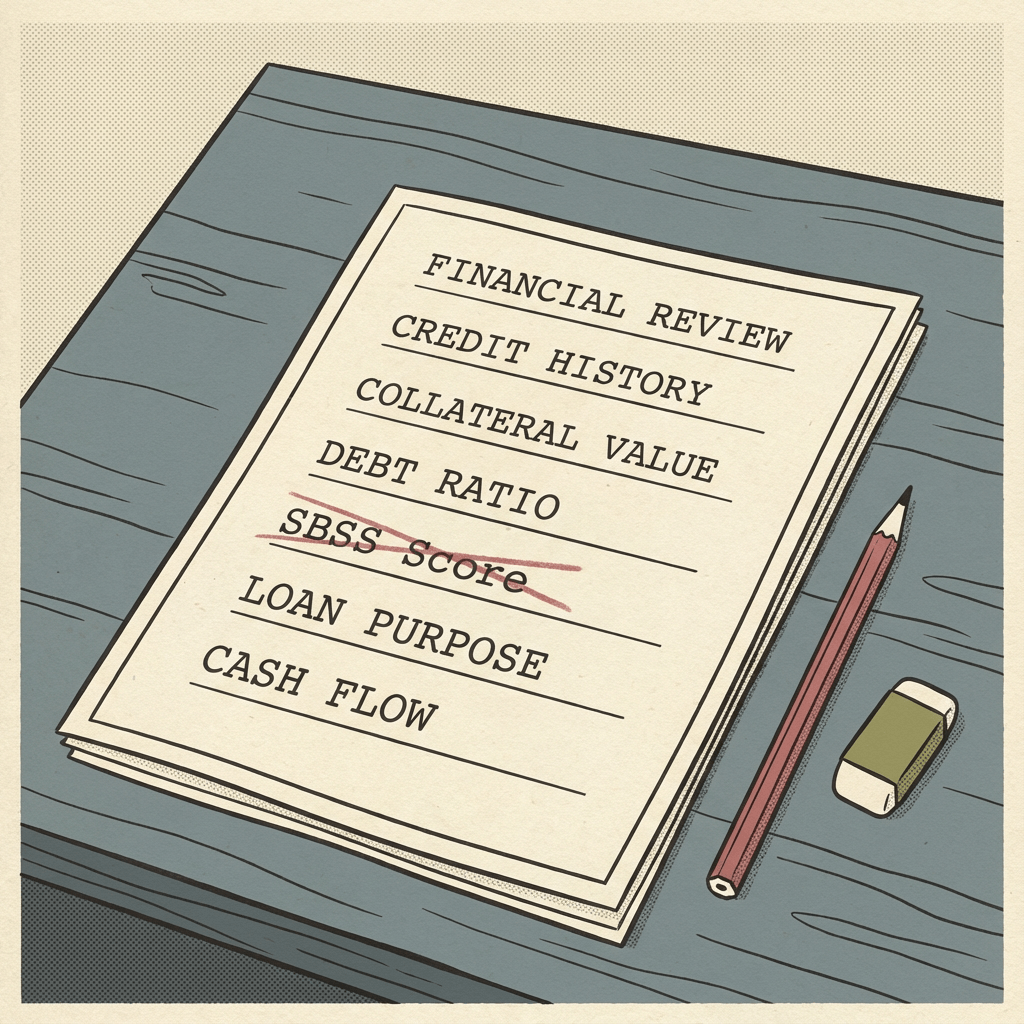
Now, when underwriters look at a business with active MCA debt, they have to include the existing MCA payments in the debt service coverage ratio calculation alongside the theoretical new SBA payment. The MCAs are not going away. The SBA proceeds cannot touch them, so they remain on the books, draining cash flow at their original pace.
The result is predictable. Businesses that would have been approved under the old rules are now being declined because their debt service coverage ratio cannot support both the existing MCA load and the new SBA payment simultaneously. It is not that the SBA is rejecting these applications outright. It is that the math no longer works once you stack the MCA debt service on top of the new SBA obligation.
This is the underwriting consequence the Senate letter does not explicitly name, but it is the operational reality on every desk in the SBA lending world.
Why the SBA Made the Rule
It is worth pausing on the question of why this rule exists in the first place, because the answer matters for any borrower hoping the Senate letter will reverse it. It almost certainly will not.
The SBA did not write SOP 50 10 8 out of indifference to small business cash flow problems. The rule exists because the SBA has been watching a specific pattern repeat itself with increasing frequency: businesses get approved for an SBA loan, the lender pays off their MCA debt at closing, the business receives the remaining proceeds, and within months, the business takes on new MCA debt. Then the SBA loan defaults.
From the SBA's perspective, this is a problem. SBA loans carry a government guarantee, which means the agency is on the hook when these deals go bad. When a meaningful share of the post-closing MCA-refinance defaults trace back to borrowers re-stacking, the agency has every incentive to close the loophole. That is what SOP 50 10 8 does.
This context does not make the rule easier on the business owner who legitimately wants to exit the MCA cycle and never look back. But it does explain why the rule is unlikely to change just because two Senators sent a letter. The default data underwriting this policy decision is not going away.
What This Means for Borrowers With MCA Debt
If you are a business owner currently carrying MCA debt and you want an SBA loan, here is what the post-June 2025 environment actually looks like:
Your application is not automatically dead. We see approvals on businesses with MCA debt every month. But the path is narrower than it was a year ago, and the borrower profile has to be stronger to clear the new underwriting bar.
The MCA debt service has to fit alongside the proposed SBA payment in your DSCR calculation. That means your business either needs enough free cash flow to support both, or you need to reduce the MCA load before applying. Some borrowers can do this by paying down a single advance with operating cash. Others may need to consider reverse consolidation as a way to restructure the existing MCA payments down to a sustainable level before pursuing the SBA loan.
Lender selection matters more than it ever has. Not every SBA lender approached MCA refinancing the same way before the rule change, and not every lender is treating the new rule the same way now. Some banks were heavy users of the MCA refinance feature and have seen their approval rates drop sharply since June 2025. Others rarely refinanced MCA debt to begin with and are largely unaffected. Knowing which lenders fall into which bucket is now a critical part of getting an approval.
Self-underwriting, the assumption that you know how your file will look to an SBA underwriter, has always been one of the biggest mistakes a borrower can make. In the post-June 2025 environment, it is even more costly. The updated SBA loan requirements for 2026 reflect a shift in what underwriters look at, how they weight existing debt, and which deals get to a yes. Borrowers who try to guess at this on their own are walking into declines that could have been avoided with the right lender match.
The Bigger Picture
The Senate letter will generate news coverage. The SBA will probably respond by the May 28 deadline. There may be hearings. There may be public statements. None of that is likely to change the rule in the short term, and even if it eventually does, the change will not happen quickly enough to help a business that needs SBA financing in 2026.
The practical reality for borrowers is this: SBA lenders are operating under the current rules, and approvals on MCA-burdened applications are still happening, but only for businesses that understand the new underwriting math and present a file that works within it.
If you are sitting on MCA debt and considering an SBA application, the most important step is to know exactly where you stand before you apply. That means understanding your current DSCR with the MCAs included, knowing which lenders are still actively considering MCA-burdened files, and identifying anything in your file that needs to be cleaned up before you submit.
FastWaySBA works across a network of SBA-approved lenders and tracks which banks have adjusted underwriting for the new MCA rule and which have not. If you want to know whether your business can still get approved with current MCA debt in the mix, book a call or apply through fastwaysba.com. We will tell you where you stand against the rules that are actually being enforced today, not the rules from a year ago.

.svg)

.svg)





.png)